

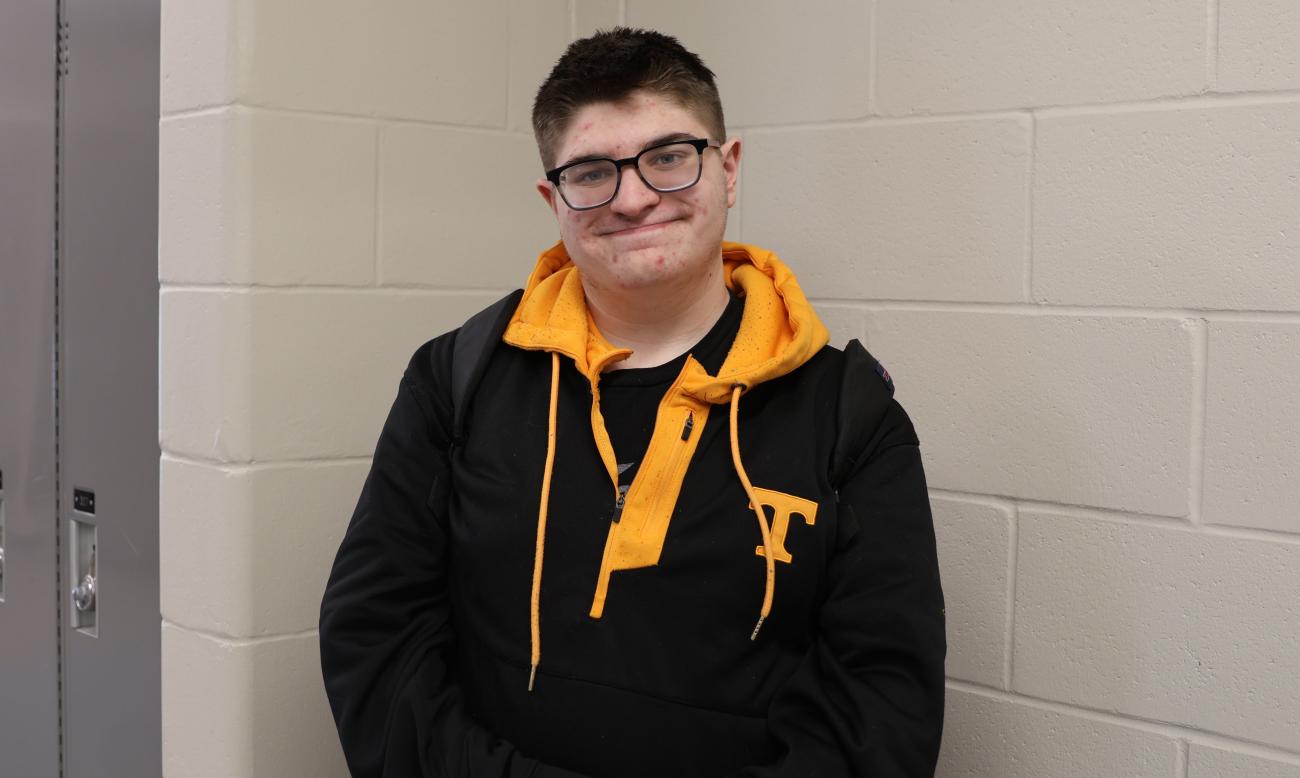
This week, students at Niverville High School have been embracing the world of neurodivergence by celebrating unique human quirks.
Student Cooper Lavin is behind the planning of Neurodiversity Spirit Week for the second year in a row. Lavin is a 16-year-old Grade 11 student who identifies as autistic, one classification of neurodivergence. The goal is to create awareness and education through participation.
On Monday, students were encouraged to wear tie-dye or vibrant colour schemes. Wednesday produced crazy hair or hats.
“For a lot of neurodivergent people, their thoughts are all over the place,” Lavin says. “The thoughts are inconsistent, loud, and out there, like vibrant colours.”
Come Friday, pajamas or other comfortable clothing will be the expression du jour.
“A lot of neurodivergent people find textures very alarming or they’re just texture sensitive,” Lavin says.
For Lavin, living the neurodivergent experience means also working hard to understand it. His research has taken him far and wide in an effort to educate on the broad spectrum of neurodivergent qualifiers and their varying traits.
Someday he hopes to use what he’s learned by training as a psychiatric psychologist.
“I have always been able to empathize with anyone,” he says. “I think there are a lot of people who have just had their voices left behind in society, especially people in places like mental hospitals. I want to give them somebody to talk to. The main persona I want is [that of] somebody you can say anything to and they won’t judge you.”
Lavin’s hope for the week isn’t lofty. If a few more students go home with a little more knowledge on the subject, the event will have served its purpose. He also hopes it will help pull back the discrimination dial one more degree.
Lavin says there’s generally two kinds of discrimination that he sees: social and systematic.
The LGBTQ community, for example, faces a lot of social discrimination. This is especially true in local settings where it’s viewed as a lifestyle choice, which some believe flies in the face of biblical principle.
According to Lavin, neurodivergent people aren’t viewed as “sinful” on the basis of their condition. Here, the problem is primarily one of systematic discrimination where the neurodivergent person must try to function in a world set up for neurotypical people.
Still, he says, even systematic discrimination can become downright dangerous.
“I believe that in 39 states in the U.S., you are allowed to sterilize a disabled person,” he says. “And you can give consent for this to be done to them if you’re a family member, without their consent.”
Again, he believes understanding is key. And if people are paying attention, there are generalizations that may help.
First, Lavin says, a neurodivergent person is usually quite frank in their response to a question. If they say they don’t want to talk about an issue, they should be taken at their word and left alone.
Obvious as that may sound, it’s not always clear to neurotypical people who will sometimes say they don’t want to talk when, deep down, they really do.
“Another big thing is to let them solve the problem themselves instead of giving them a solution for it. If someone who is neurodivergent in your classroom gets up and leaves, don’t question them. Just leave them alone because talking to them just restarts the timer for when they’re going to be okay.”
These principles only scratch the surface of all there is to learn about neurodivergence. What it really boils down to is deep compassion for one another, regardless of differences. The understanding will naturally fall into place as a result.
“Our strength as humans is in unity,” says Lavin. “If we just help each other and try not to be better than anyone else, everyone will be better.”
For Lavin, the sage wisdom he shares appears to come naturally and from a very thoughtful place. It’s backed, as well, by a healthy dose of humility.
“I don’t think that I’m a more impressive person than other people. I just think that a lot of people don’t realize just how absolutely incredible they are.”